

Many women wonder whether they should adapt their diet, training or daily routine to their current cycle phase. In this article, Dr. Monica Calcagni explains how much influence hormones really have on our needs, which challenges individual phases can bring – and why your own body's signals are more reliable than any standardized calendar. A contribution to women's health that aims to strengthen your understanding of your own cycle without creating new rules.
Key Takeaways
- Estrogen and progesterone levels change over the course of the month, but the fundamental needs – sufficient energy, varied nutrition, sleep, movement, recovery and stress management – remain valid throughout the entire cycle.
- The 28-day cycle with ovulation on day 14 is only a teaching model – duration varies between people and even within the same person.
- Adaptation should start from individual symptoms, not from a standardized calendar.
- A cycle diary kept over two or three cycles helps distinguish a repeated pattern from a randomly difficult day.
- Very irregular or absent cycles, very heavy bleeding, disabling pain or severe premenstrual symptoms should be assessed by a doctor.
In recent years “cycle syncing” has become very popular: workouts, foods, supplements and even work commitments are organized around the phase of the menstrual cycle. The idea starts from something real: estrogen and progesterone levels change over the course of the month and can influence body temperature, the uterine lining, cervical mucus, appetite and the perception of certain symptoms. From here, however, people often jump to conclusions that are far more rigid than the scientific evidence allows.
Hormones change, but they don't automatically turn the body into four different organisms. The fundamental needs – sufficient energy, varied nutrition, sleep, movement, recovery and stress management – remain valid throughout the entire cycle. What can change is how a person perceives hunger, pain, energy levels or the ability to train. These are real differences for some women, minimal or absent for others.
The most accurate answer, then, is neither “needs are always identical” nor “every phase requires a precise protocol.” It is: some needs can shift, but adaptation should start from individual symptoms, not from a standardized calendar.
The Menstrual Cycle: Phases and Processes
The female cycle is based on the interplay of various hormones. The first day of menstrual bleeding is day 1 of the cycle. From that point the follicular phase begins, during which follicle-stimulating hormone (FSH) supports the development of the follicles in the ovaries. In the early part, which coincides with menstruation, estrogen and progesterone are low. Later, estradiol tends to rise as the dominant follicle is selected.
When estradiol reaches high levels for a sufficient length of time, it triggers the luteinizing hormone (LH) surge that precedes ovulation. After the egg is released, the follicle turns into the corpus luteum and produces mainly progesterone: this is the luteal phase, also known as the corpus luteum phase. In most women it lasts around 14 to 15 days. If pregnancy does not begin, estrogen and progesterone decline, the uterine lining sheds, and a new period begins.
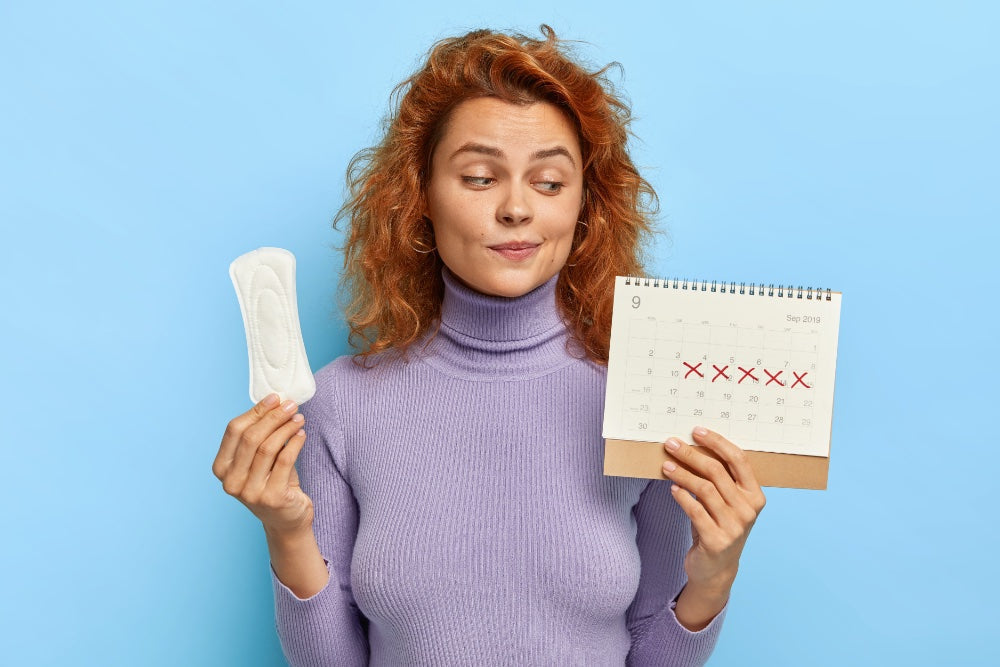
This is how long menstrual bleeding usually lasts.
The female cycle is often divided, in simplified form, into four phases: menstruation (days 1–5), follicular phase (days 6–13), ovulation (around day 14) and luteal phase (days 15–28). However, the classic 28-day cycle with ovulation on day 14 is only a teaching model – medically, menstruation is already part of the follicular phase, which usually lasts between 12 and 15 days in total. Duration varies between people and even within the same person; the follicular phase in particular can lengthen or shorten. An app that calculates ovulation using only the average of past cycles produces an estimate, not a diagnosis. Hormonal contraceptives, perimenopause, breastfeeding, PCOS, stress, energy availability and many clinical conditions can alter or suppress normal ovulatory patterns.
Hormone Testing
The fact that hormone levels fluctuate doesn't mean it's useful to measure them constantly. A single estrogen or progesterone reading is a snapshot taken at one precise moment: interpreting it depends on the day of the cycle, the reason for the test, and the likelihood that ovulation has occurred. Values taken out of context can lead to inappropriate diagnoses of “estrogen dominance,” “low progesterone” or a generic “hormonal imbalance.”
For a woman with regular cycles and no significant symptoms, there is normally no need to build a monthly hormone panel to decide what to eat or how to train. Testing becomes useful when it answers a clinical question: absent or very irregular cycles, suspected anovulation, infertility, signs of androgen excess, galactorrhea, thyroid symptoms, or the menopausal transition to be assessed in selected situations.
Wearable devices also deserve the right perspective. Skin temperature, heart rate and sleep quality can show interesting variations, but they are not equivalent to a medical evaluation and do not, on their own, define a nutritional requirement. They can help someone learn their own personal pattern, as long as the numbers don't become a new source of anxiety. The most useful data point is the one that changes a concrete decision and improves wellbeing, not the one collected simply because it's available.
Early Follicular Phase: Menstruation, Symptoms and Iron
During the early follicular phase estrogen and progesterone are at their lowest levels. Bleeding is accompanied by the production of prostaglandins, molecules involved in uterine contractions and cramps. Some people experience fatigue, pain, digestive upset or headaches; others go about their everyday lives without particular differences.
In this phase the most important need is not to follow a “menstrual diet,” but to respond to symptoms. If someone feels fine, there's no medical reason to avoid sport or other commitments. If pain is significant, it can make sense to temporarily reduce intensity, choose a more tolerable activity, stay on top of hydration, and use the painkillers indicated by a doctor. Rest and local heat can help, but pain that regularly prevents school, work, or social life deserves an assessment and should not be normalized.
Among nutrients, iron requires separate discussion. Menstrual blood loss involves a loss of iron, particularly relevant with heavy or prolonged flow. This doesn't mean everyone needs to take a supplement during menstruation. Indiscriminate supplementation can cause gastrointestinal effects and delay identifying the actual cause of a deficiency. With persistent fatigue, paleness, shortness of breath, reduced performance, or very heavy periods, it's worth speaking with a doctor and evaluating a blood count and ferritin.
Diet can regularly include sources of iron: meat and fish for those who eat them, legumes, tofu, fortified cereals, nuts and seeds. Iron from plant sources is absorbed better when paired with a source of vitamin C. However, when true anemia exists, food alone may not be enough and a treatment based on test results is needed.
Late Follicular Phase and the Time Around Ovulation
After menstruation, estradiol tends to rise. Some women report a greater desire for activity and social interaction in the follicular phase and feel more energetic and communicative, or experience more sexual desire, as ovulation approaches – but this isn't a universal experience. The absence of these signals shouldn't be read as proof of an imbalance in the hormonal system.
From a reproductive standpoint, the most useful thing to recognize may be the change in cervical mucus, which tends to become more abundant, clear and elastic on fertile days. The fertile period doesn't coincide with a single day: sperm can survive for several days in the female reproductive tract, and the chance of conception includes the days preceding ovulation. This is important both for those seeking pregnancy and those wishing to avoid it; observing mucus or using an app alone doesn't guarantee reliable contraception.
Is there a need to eat or train specially in this phase? Current evidence doesn't support universal protocols. Some physiological mechanisms suggest variations in energy substrate use, but performance studies show very heterogeneous results. If a person feels more energetic and motivated, they can take advantage of it for a demanding workout – not because the phase requires it, but because that day the body responds well.
Luteal Phase: Progesterone, Temperature and Appetite
After ovulation, progesterone increases. Basal temperature generally rises a few tenths of a degree and stays elevated until menstruation. This variation can help confirm, after the fact, that ovulation probably occurred, but doesn't predict it precisely in real time.
In the luteal phase, especially in the premenstrual days, some people notice more hunger, cravings for sweet or carbohydrate-rich foods, bloating, breast tenderness, irritability, low mood, fatigue, or less restorative sleep. When these symptoms are pronounced, this is referred to as premenstrual syndrome (PMS). Literature reviews suggest average energy intake may be slightly higher than in the follicular phase, but individual differences are wide.
women are affected by premenstrual syndrome (PMS).
Greater hunger isn't a lack of willpower. Ignoring it with rigid restriction can favor an alternation between control and binge eating. It can be more useful to keep meals regular, include protein, complex carbohydrates, fats – for example from sources of omega-3 fatty acids such as flaxseed or walnuts – and fiber, and plan a snack if needed. Drinking regularly and reducing excess salt can help some people with bloating, but there's no need to eliminate whole food categories.
Supplements shouldn't be automatic here either. Magnesium, vitamin B6 and various plant extracts are proposed for premenstrual symptoms, but efficacy, dosage and evidence quality aren't the same across all products. Also, “natural” doesn't mean free of interactions or contraindications. Before combining several substances it's worth considering diet, medications, conditions, possible pregnancy, and the real intensity of symptoms.
Sport and Training
A systematic review with meta-analysis found, on average, only a negligible reduction in performance in the early follicular phase compared to other phases, with low-quality evidence and great variability between studies. The authors' conclusion is clear: general training rules based on cycle phase cannot be formulated; a personalized approach is preferable.

This is very different from saying the cycle “doesn't matter.” For someone with severe dysmenorrhea, menstrual migraine, heavy bleeding, or premenstrual syndrome, symptoms can genuinely change training and recovery. But the change should respond to what's actually happening, not to the idea that everyone is necessarily weaker during flow or stronger at ovulation.
For those who exercise, the priority is ensuring sufficient energy throughout the month. A persistent energy deficit can alter the cycle, bone health, recovery, and performance. If the cycle becomes very irregular or disappears, that's not a sign that training “is working” – it's a warning sign to be evaluated.
Sleep, Mood and Cognitive Function
Premenstrual symptoms can interfere with sleep, mood and mental wellbeing; menstrual pain can reduce concentration and productivity. When negative emotions occur, they often do so in the second half of the cycle. This doesn't mean, however, that hormonal fluctuations cyclically make women incapable of deciding, working, or driving. Narratives that turn individual variations into universal female deficits are scientifically weak and socially harmful.
It does make sense, however, to recognize a recurring symptom and organize around it when possible. If insomnia appears in the premenstrual days for three consecutive cycles, one can focus more on sleep regularity, reduce evening caffeine and alcohol, and plan recovery. Regular exercise and relaxation techniques such as yoga can also help ease premenstrual symptoms. If mood changes are intense, compromise relationships, or include depressive thoughts, one should consider severe premenstrual syndrome or premenstrual dysphoric disorder with a professional.
Everyday Tips: Observe Before Correcting
Before buying protocols, tests or many supplements, it can be useful to monitor two or three cycles. Each day one can note flow, pain, energy, hunger, sleep, mood, physical activity, and medications used. It takes a few minutes; the goal isn't to obsessively control the body, but to distinguish a repeated pattern from a randomly difficult day.
If a constant variation emerges, one can try a simple adaptation and verify its effect: an extra snack on higher-hunger days, a more flexible workout when cramps appear, a stricter evening routine before menstruation. Changing one thing at a time helps understand what actually works.
For cycle-related complaints, this diary can also be useful during a gynecological visit. Cycles frequently shorter than 21 days or longer than 35, highly variable intervals, bleeding between periods, very heavy flow, absence of cycle, disabling pain, or severe premenstrual symptoms should not be managed with self-treatment alone.
If cycles are often shorter or longer, this should be assessed by a gynecologist.
Conclusion: So, Do Needs Really Change?
Yes, they can change, but not according to a mandatory script. In the menstrual phase it may be necessary to manage pain and iron loss; around ovulation, fertility and contraception become relevant; in the luteal phase, hunger, body temperature, and premenstrual symptoms may increase. None of these possibilities automatically imposes a specific food, supplement, or workout.
The menstrual cycle can be a source of information, not a system of rules. The most sensible strategy is to maintain solid foundations for health throughout the month, observe one's own responses, and adapt when needed. Personalizing means listening to the body's real signals, not replacing an old stereotype with a new calendar.
Frequently Asked Questions About the Menstrual Cycle
Can you get pregnant during your period?
It is unlikely, but not impossible. Because sperm can survive in the body for up to five days, pregnancy is possible especially with short cycles or long bleeding if ovulation occurs early. Menstruation alone is therefore not a reliable form of contraception.
What is the difference between PMS and PMDD?
Premenstrual dysphoric disorder (PMDD) is considered a severe form of premenstrual symptoms. The focus is on psychological symptoms such as pronounced low mood, anxiety, tension or irritability that significantly affect everyday life and relationships. PMDD affects far fewer women than PMS – estimates range from around 3 to 8 percent. The diagnosis should be made by a professional.
Are there cycle phases when taking the pill?
With combined hormonal contraceptives such as the classic pill, ovulation is usually suppressed, so no natural cycle with follicular, ovulatory and luteal phases takes place. The bleeding during the pill-free interval is a so-called withdrawal bleed and not a menstrual period in the true sense. After stopping the pill, it can take some time for your own rhythm to return – read more in our article on post-pill syndrome.
When is menstrual bleeding considered heavy?
Medically, bleeding is considered heavy when more than around 80 milliliters of blood are lost per cycle. This is difficult to measure in everyday life; signs include having to change pads or tampons every one to two hours for several hours in a row, passing larger blood clots, or bleeding that lasts longer than seven days. In these cases, a gynecological assessment is advisable.
How do you measure basal body temperature correctly?
Basal temperature is measured in the morning immediately after waking up – before getting out of bed, ideally at the same time each day and using the same method. A digital thermometer with two decimal places is suitable. Factors such as little sleep, alcohol the evening before or infections can distort the readings and should be noted as well.
Essential Scientific References
- McNulty KL, et al. The effects of menstrual cycle phase on exercise performance in eumenorrheic women: a systematic review and meta-analysis. Sports Medicine. 2020;50:1813-1827. PMID: 32661839.
- Tucker JAL, et al. The effect of the menstrual cycle on energy intake: a systematic review and meta-analysis. Nutrition Reviews. 2025;83(3):e866-e886. PMID: 39008822.
- Rogan MM, Black KE. Dietary energy intake across the menstrual cycle: a narrative review. Nutrition Reviews. 2023;81(7):869-886. PMID: 36367830.
- Janse de Jonge XAK, et al. Methodological recommendations for menstrual cycle research in sports and exercise. Medicine & Science in Sports & Exercise. 2019;51(12):2610-2617. PMID: 31246715.
- World Health Organization. Daily iron supplementation in adult women and adolescent girls. Geneva: WHO; 2016.
Why no magnesium during pregnancy?